5 Habits That Make Sinus Infections Worse in Palm Springs, CA
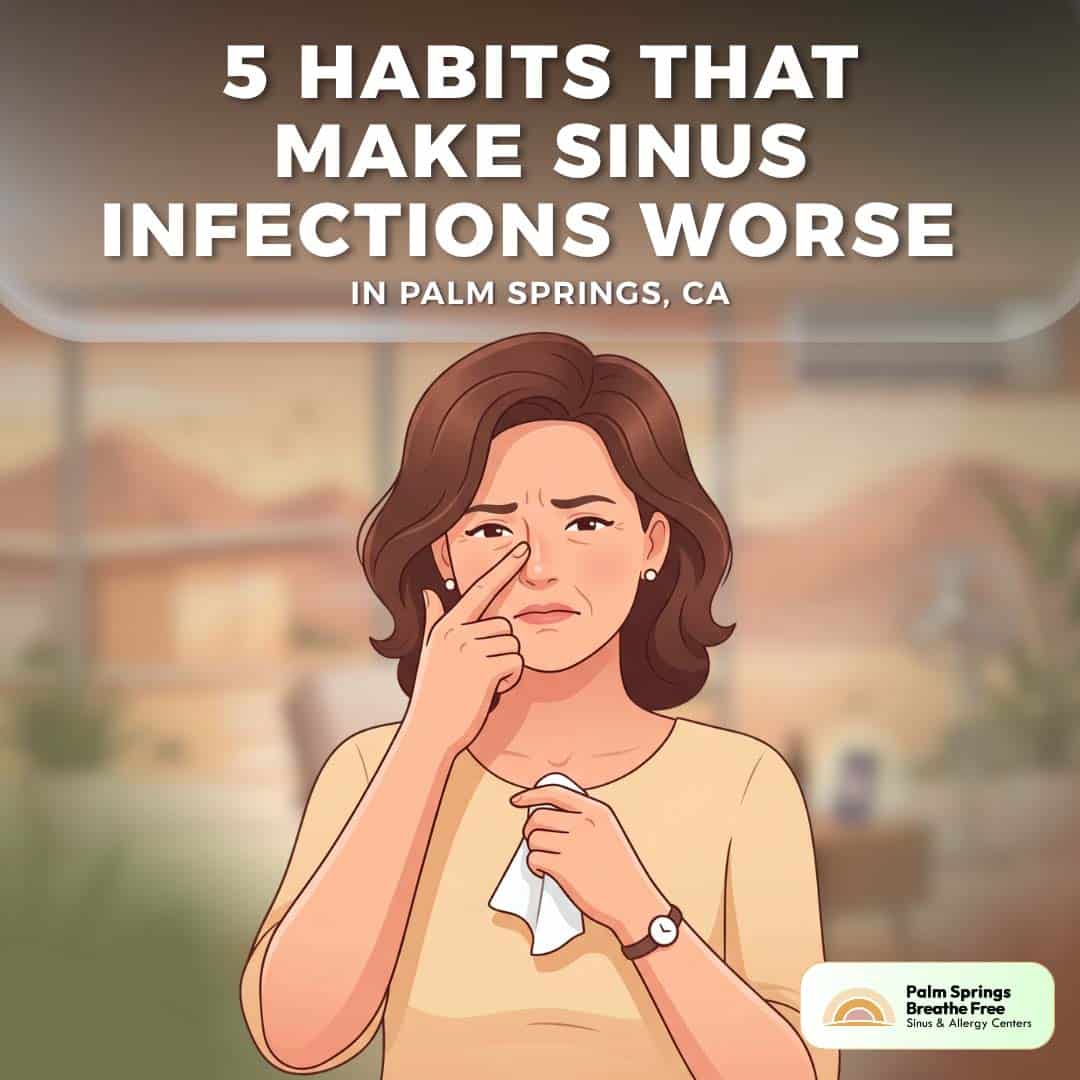
Persistent sinus issues such as nasal congestion, breathing difficulties, postnasal drip, headaches, and sinus pressure are not life-threatening in most cases. However, dealing with them can become frustrating, especially if they start affecting day-to-day life, productivity, sleep quality, and comfort.
People dealing with recurring sinus infections in Palm Springs, CA, may notice that certain daily and seemingly harmless habits may worsen their symptoms.
An ENT doctor can help assess your symptoms and discuss what might be worsening your sinus issues.
5 Habits That May Be Worsening Your Sinusitis in Palm Springs, CA, and What You Can Do About Them
❌ You’re ignoring potential allergens and irritants in the air
In some cases, allergies may overlap with ongoing sinus issues, such as sinusitis. Ignoring common allergens and irritants in the air, such as pollen, dust mites, mold spores, pet dander, smoke, air pollution, and strong scents, may contribute to worsening sinus irritation or symptoms.
✅ What you should do instead: Stay on top of your allergies
While you can’t fully avoid allergens, irritants, and triggers in the air, you can adopt certain habits to stay on top of them and minimize your exposure to them:
- Monitor daily pollen and allergen forecasts
- If you have to go out on high pollen days, wear a protective mask to minimize exposure to allergy triggers
- Keep your home and work space clean and free from potential allergens and irritants
- Keep windows closed on windy and high pollen days
- Practice good hygiene and hand-washing habits
- Avoid smoking, especially if you’re already dealing with ongoing sinus issues
- Refrain from using strong perfumes or colognes in the meantime, to avoid further irritating your sinuses
❌ Your indoor air is too dry
Palm Springs is known for its dry heat. While it’s much more bearable than the muggy, humid heat, extreme dryness in the air may dry and irritate the sinuses.
Dry air can irritate the nasal passages and contribute to thicker mucus, which may not move through the sinuses as efficiently. For some people, this can contribute to congestion, sinus discomfort, and pressure.
✅ What you should do instead: Humidify your indoor air
Consider running an indoor humidifier, which can potentially add moisture to the air, especially in your bedroom during sleep. This may help reduce dryness-related sinus irritation for some people. Don’t forget to regularly clean your humidifier to prevent mold growth.
Moreover, you don’t want to excessively humidify your indoor air. Keep indoor humidity levels between 30% to 50% to limit mold growth in your home.
❌ You’re dehydrated
The sinuses naturally produce mucus that not only humidifies the air we breathe, but also traps and removes potential irritants in the sinus passages.
When the sinuses are dehydrated, the mucus membranes can become dry and irritated. As a result, they may produce thick and sticky mucus, which is less efficient in doing its job. For some people, extreme dryness may worsen sinus discomfort, congestion, or, in some cases, sinusitis.
✅ What you should do instead: Keep yourself hydrated
If you’re dealing with ongoing sinus symptoms, drink plenty of water throughout the day to stay hydrated. You may also consider limiting your consumption of dehydrating beverages, such as caffeine and alcohol. This may support normal mucus consistency and overall sinus comfort.
❌ You’re overusing nasal decongestant sprays
Nasal decongestant sprays are a common medication for dealing with nasal congestion. These sprays work by narrowing the nasal blood vessels, which, in some cases, may offer some temporary relief from chronic nasal congestion.
Overusing nasal decongestant sprays can pose a problem, as this can further irritate the sinuses and increase nasal congestion. This is known as rebound congestion.
✅ What you should do instead: Learn the proper way to use nasal decongestant sprays
Make sure to use nasal decongestant sprays only as directed on the label or by your physician.
Moreover, ask your healthcare provider if nasal irrigation is appropriate for your condition. Don’t forget to follow device instructions on proper use, and to only use sterile, distilled, or previously boiled water to minimize the risk of infection.
❌ You’re not sleeping enough and right
Adequate sleep and rest can help support overall health and immune function, especially if you’re already dealing with ongoing sinus issues or infections. If you’re not getting enough sleep every night, you may not be helping your body fight off the infection.
Additionally, sleeping with the head flat on the bed may cause increased nasal congestion, sinus discomfort, and breathing difficulties in some people.
✅ What you should do instead: Get enough sleep and sleep in the right way
Make sure to get enough sleep every night. The number of hours you should sleep will vary depending on your age and individual needs. However, it’s generally recommended for adults to get about seven to nine hours of sleep every night.
Moreover, try sleeping with your head slightly elevated. This may support mucus drainage and sinus comfort as it may help prevent mucus from pooling in the sinuses.
Commonly Asked Questions About Sinusitis Care in Palm Springs, CA
What is sinusitis?
Sinusitis is the irritation, swelling, and inflammation of the tissues lining the sinuses, which can cause nasal congestion, breathing difficulties, and sinus pressure.
The sinuses are hollow, air-filled spaces located behind the nose, cheeks, and forehead. When they become irritated and swollen, mucus can get trapped and cause a buildup.
What does an ENT in Palm Springs, CA, do?
An ENT, also known as an otolaryngologist, diagnoses and treats conditions affecting the ears, nose, throat, neck, and related facial structures. Depending on their clinical focus and subspecialty, some conditions that they may address include sinusitis, allergies, ear infections, hearing disorders, balance issues, throat concerns, and sleep-related breathing problems.
Available services vary by clinic and provider.
When is it time to see an ENT specialist for a sinus infection?
While some sinus issues resolve over time with rest, proper hydration, and some over-the-counter medications, consider seeing an ENT specialist if symptoms worsen or persist for more than 10 days.
Moreover, seek immediate medical attention for severe symptoms, such as a stiff neck, facial swelling, high fever, vision changes, or confusion.
Conclusion: Looking for an ENT Clinic Near Me in Palm Springs, CA
Palm Springs Breathe Free offers ENT care services in Palm Springs and the surrounding Coachella Valley communities. Schedule an appointment to find out more about ENT services near you.