
ENT vs. Allergist
Which Specialist Should You See?
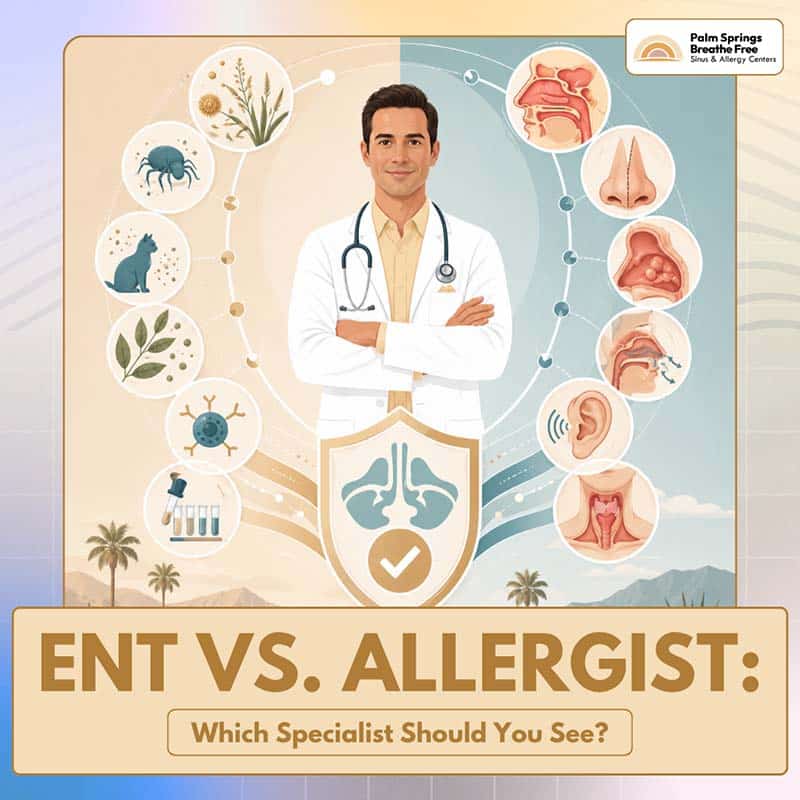
Living in the Coachella Valley has its advantages, but it can also bring unique challenges for your sinuses and allergies. Dry desert air, seasonal winds, pollen from local plants, and airborne dust can all contribute to congestion, sinus pressure, and other symptoms that make it difficult to know exactly what’s going on. At Palm Springs Breathe Free Sinus & Allergy Centers, one of the questions we hear most often is, “Should I see an ENT or an allergist?” It’s a reasonable question because many ear, nose, and throat conditions share the same symptoms as allergies.
The key isn’t choosing a specialist based on your symptoms alone. It’s understanding what’s causing them.
What Does an ENT Treat?
An ear, nose, and throat (ENT) physician, also known as an otolaryngologist, diagnoses and treats conditions affecting the ears, nose, sinuses, throat, and related structures of the head and neck.
Many patients visit an ENT for concerns such as:
- Chronic sinusitis
- Nasal obstruction
- Deviated septum
- Nasal polyps
- Recurrent sinus infections
- Hearing changes or ear infections
- Hoarseness and throat concerns
- Snoring and certain sleep-related breathing conditions
Rather than focusing on one symptom, an ENT evaluates how inflammation, nasal anatomy, airflow, and sinus drainage work together. Congestion, for example, may be caused by allergies, but it can also result from structural changes inside the nose or long-term sinus inflammation.
What Does an Allergist Treat?
An allergist focuses on conditions caused by the immune system’s response to allergens.
This includes seasonal allergies, year-round environmental allergies, asthma, eczema, and certain food or medication allergies. Allergy testing can help identify triggers such as pollen, dust mites, mold, or pet dander, allowing treatment to target the substances responsible for your symptoms.
If allergies are the primary cause of your congestion or sneezing, identifying those triggers is an important part of long-term symptom management.
Why the Symptoms Can Look So Similar
One reason patients struggle to decide which provider to see is that allergies and chronic sinus conditions often overlap.
Both can cause:
- Nasal congestion
- Postnasal drip
- Facial pressure
- Headaches
- A reduced sense of smell
The reason lies in how inflammation affects the nose.
When allergens trigger your immune system, the lining of the nasal passages swells. As that swelling increases, the small openings that allow the sinuses to drain become narrower. Mucus may no longer flow as easily, creating pressure, congestion, and discomfort even when no infection is present.
Over time, persistent inflammation may contribute to recurring sinus infections or make symptoms related to existing structural issues more noticeable.
That’s why treating allergies alone doesn’t always resolve chronic sinus symptoms.
Why Palm Springs Residents Face Unique Challenges
The Coachella Valley presents a combination of environmental factors that can affect the nose and sinuses throughout much of the year.
Dry air can irritate the lining of the nasal passages, while seasonal pollen, desert vegetation, and windy conditions increase exposure to airborne allergens and dust. During periods of strong winds, fine particles can travel throughout the region, irritating already inflamed nasal tissues.
For many residents of Palm Springs, Palm Desert, Cathedral City, Rancho Mirage, and surrounding communities, symptoms don’t always fit neatly into a single diagnosis. Allergies, chronic sinus inflammation, and structural concerns may all be contributing at the same time.
How ENT Specialists Help Identify the Underlying Cause
An ENT evaluation goes beyond confirming that you’re congested.
Your provider will discuss when your symptoms began, whether they occur year-round or during certain seasons, how they affect your sleep and daily activities, and whether you’ve experienced recurring sinus infections, facial pressure, or changes in your sense of smell.
Depending on your symptoms, your evaluation may include allergy testing, nasal endoscopy, or other diagnostic tools that may help identify factors contributing to your symptoms.
The goal isn’t simply to determine whether you have allergies. It’s to develop a more complete understanding of your symptoms so treatment recommendations are guided by your medical history, examination findings, and factors that may be contributing to your condition.
How Do I Know It’s Time to Stop Waiting and Get Checked?
Occasional allergy symptoms are common, especially during periods of high pollen or windy weather. However, an ENT evaluation may be appropriate if:
- Congestion lasts for several weeks.
- You experience recurring sinus infections.
- Facial pressure becomes a regular problem.
- Nasal blockage interferes with sleep.
- Symptoms return throughout the year.
- You’re unsure whether allergies or another ENT condition is responsible.
An evaluation doesn’t necessarily mean you’ll need a procedure. More often, it helps explain why your symptoms continue and what treatment options may be appropriate for your condition.
The Right Diagnosis Makes Choosing the Right Care Easier
Choosing between an ENT and an allergist isn’t always about selecting one instead of the other. Many patients have symptoms caused by more than one condition, making an accurate diagnosis the most important first step. Once the underlying cause is identified, it’s much easier to develop a treatment plan that’s tailored to your needs.
At Palm Springs Breathe Free Sinus & Allergy Centers, we help patients throughout Palm Springs and the Coachella Valley better understand persistent sinus, allergy, and ear, nose, and throat concerns through personalized evaluations and compassionate care. Schedule an appointment with our team to learn what’s causing your symptoms and explore treatment options designed around your individual needs.